
If you have ever spent hours writing a brilliant research paper, only to realize you still have to format the bibliography, you know the unique frustration of academic referencing. Crafting a compelling argument takes immense effort, but the meticulous task of tracking down publication dates, italicizing journal titles, and placing commas perfectly can quickly drain your remaining energy.
Fortunately, modern technology offers a seamless solution: a free APA citation generator. Designed to take the guesswork out of referencing, these digital tools have revolutionized the way students, researchers, and professionals compile their sources.
Whether you are writing a brief essay or a massive dissertation, leveraging a references generator is one of the smartest academic decisions you can make. In this comprehensive guide, we will explore the numerous benefits of using these tools, how they streamline your workflow, and practical tips for ensuring your papers are perfectly formatted every single time.
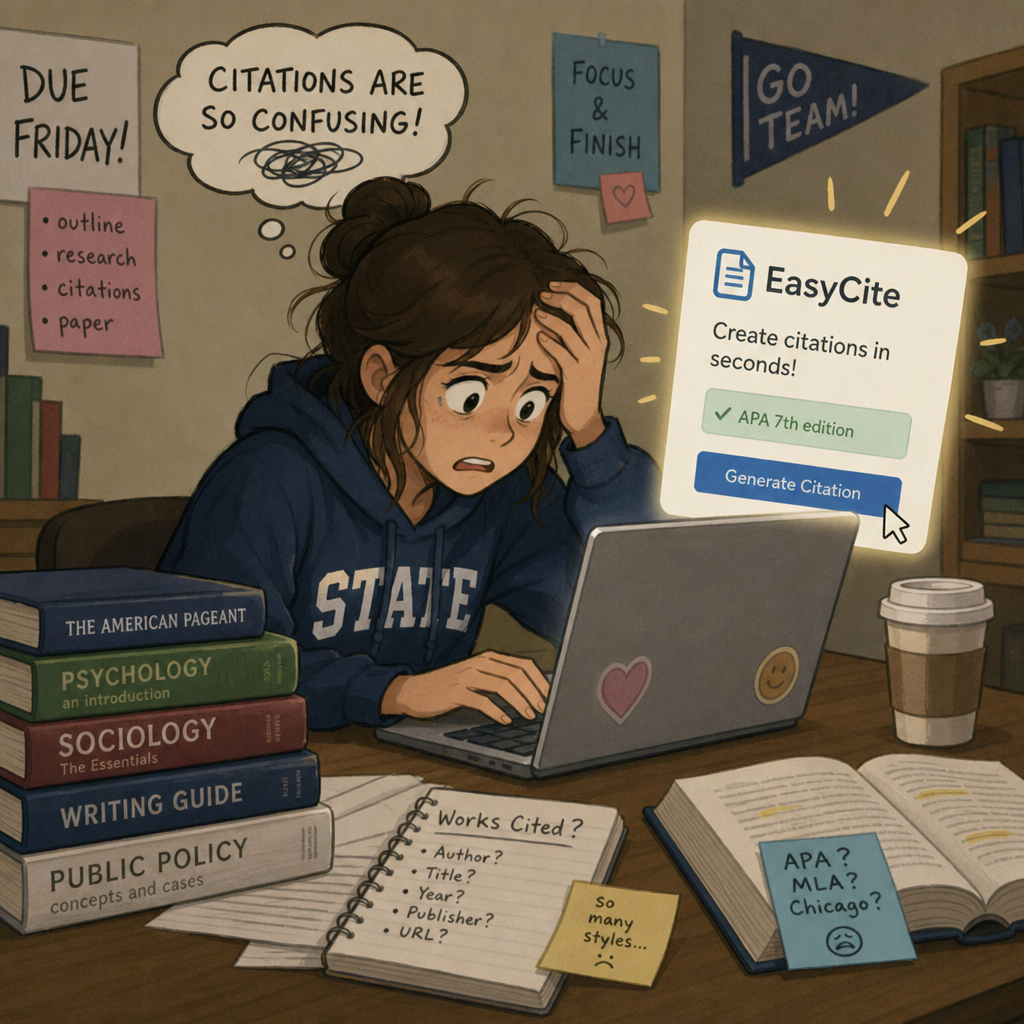
Automated Citation Tools vs Manual Formatting
To truly appreciate the value of a modern free cite generator, it helps to understand the traditional alternative. Not long ago, students had to rely entirely on memorization or constantly flipping through thick style manuals to format their sources.
When looking at automated citation tools vs manual formatting, the differences in efficiency are staggering. Manual formatting requires you to memorize the intricate American Psychological Association manual guidelines, which dictate everything from the exact placement of a period to the specific way you must list multiple authors. Even the most diligent writers are prone to human error when manually typing out dozens of references. A misplaced comma or a forgotten italicization can result in lost points on your final grade.
Conversely, an automated tool does the heavy lifting for you. By simply pasting a URL or entering a book title, the software instantly retrieves the necessary metadata and arranges it according to the latest standards. It transforms a tedious, hour-long chore into a task that takes mere seconds.
Top Benefits of Using a Free APA Citation Generator
Why should you integrate a digital referencing tool into your writing process? Here are the most compelling advantages.
1. Saves Precious Academic Time
Time is arguably a student's most valuable resource. When you use a one-click academic bibliography maker, you reclaim hours that would otherwise be spent scouring style guides. Instead of manually typing out every detail, you can automatically format bibliography for research paper assignments at the push of a button. This allows you to redirect your focus toward what truly matters: conducting thorough research, refining your thesis statement, and editing your prose.
2. Ensures Unmatched Accuracy
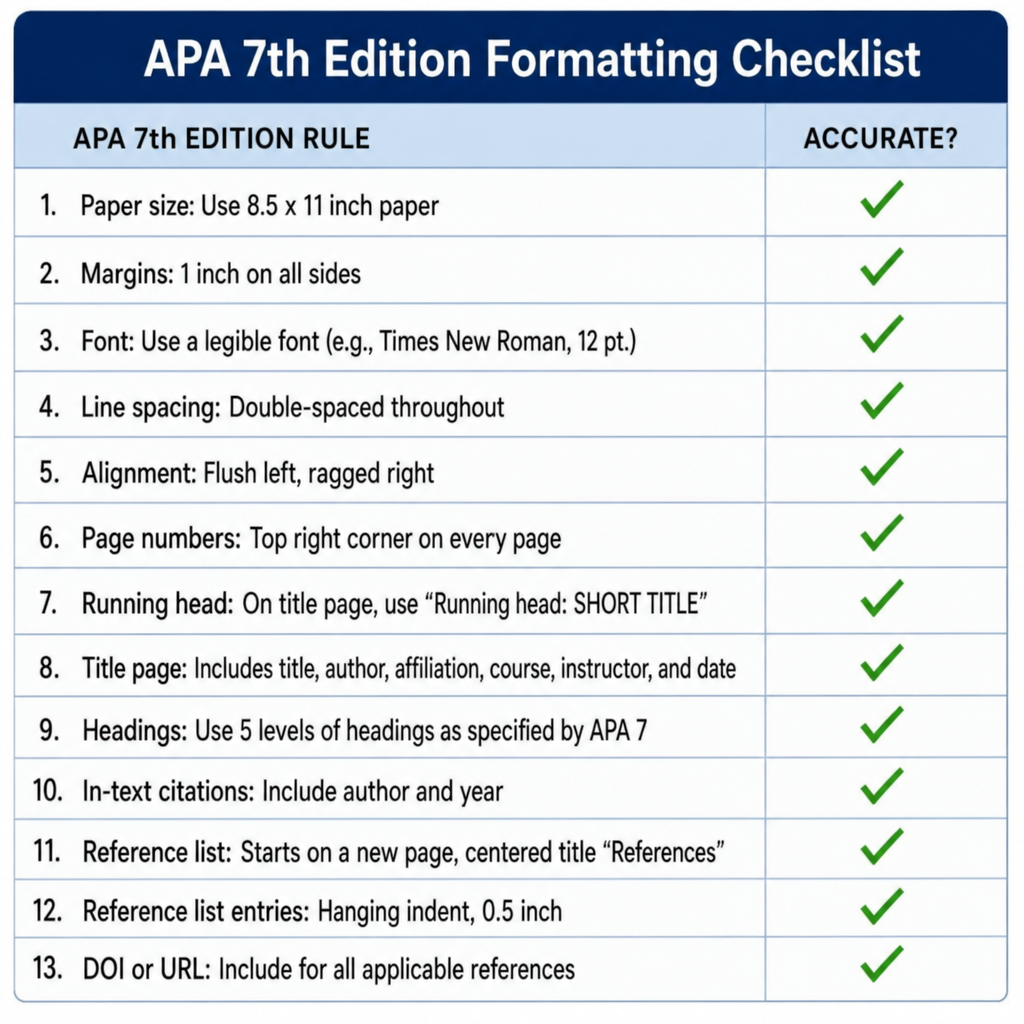
The rules of referencing are constantly evolving. For instance, the transition from the 6th to the 7th edition of APA brought significant changes, such as the removal of publisher locations for book citations and new guidelines for citing digital media. A high-quality free APA citation generator is regularly updated to reflect the strict APA 7th edition formatting rules. This ensures unmatched accuracy, helping you in fixing common APA style errors before you even submit your paper.
3. Safeguards Your Academic Integrity
Perhaps the most crucial benefit of referencing is proving the originality of your work. Understanding how to avoid plagiarism in college papers is essential for academic survival. Plagiarism isn't always intentional; often, it occurs because a student forgot to cite a source or formatted the citation incorrectly. Using a dependable citations generator guarantees that every piece of borrowed information is properly credited to its original author, thereby safeguarding your academic reputation.
Mastering Different Formats and Styles
While you may primarily be looking for APA formatting, academic journeys often cross multiple disciplines. You might take a psychology class that requires APA, followed immediately by a literature course that demands MLA style.
The beauty of modern digital tools is their versatility. A robust platform doesn't just function as a free APA citation generator; it often doubles as a citation generator MLA users can rely on. If you find yourself needing to switch styles, you can easily toggle the settings to use the platform as a cite MLA generator. This flexibility means you don't need to learn a whole new software ecosystem every time you change subjects.
Navigating Digital Sources
One of the most common challenges students face today is figuring out how to cite a website in APA. Unlike traditional books, websites often lack clear publication dates or easily identifiable authors.
When you use a sophisticated referencing tool, you simply input the URL. The generator will scan the webpage, extracting the author's name, the date the article was published, the title of the page, and the website's name. If information is missing, the tool will prompt you to fill in the blanks, ensuring your citation remains compliant with official guidelines.
Additionally, for peer-reviewed journal articles, many generators feature a digital object identifier lookup tool. By simply pasting the DOI (a unique alphanumeric string assigned to academic articles), the tool instantly pulls pristine, error-free metadata directly from academic databases.
Perfecting Your Text: In-Text Citations Made Easy
Building your final reference list is only half the battle; you also need to accurately cite sources within the body of your text. This is where an in text citation generator becomes incredibly useful.
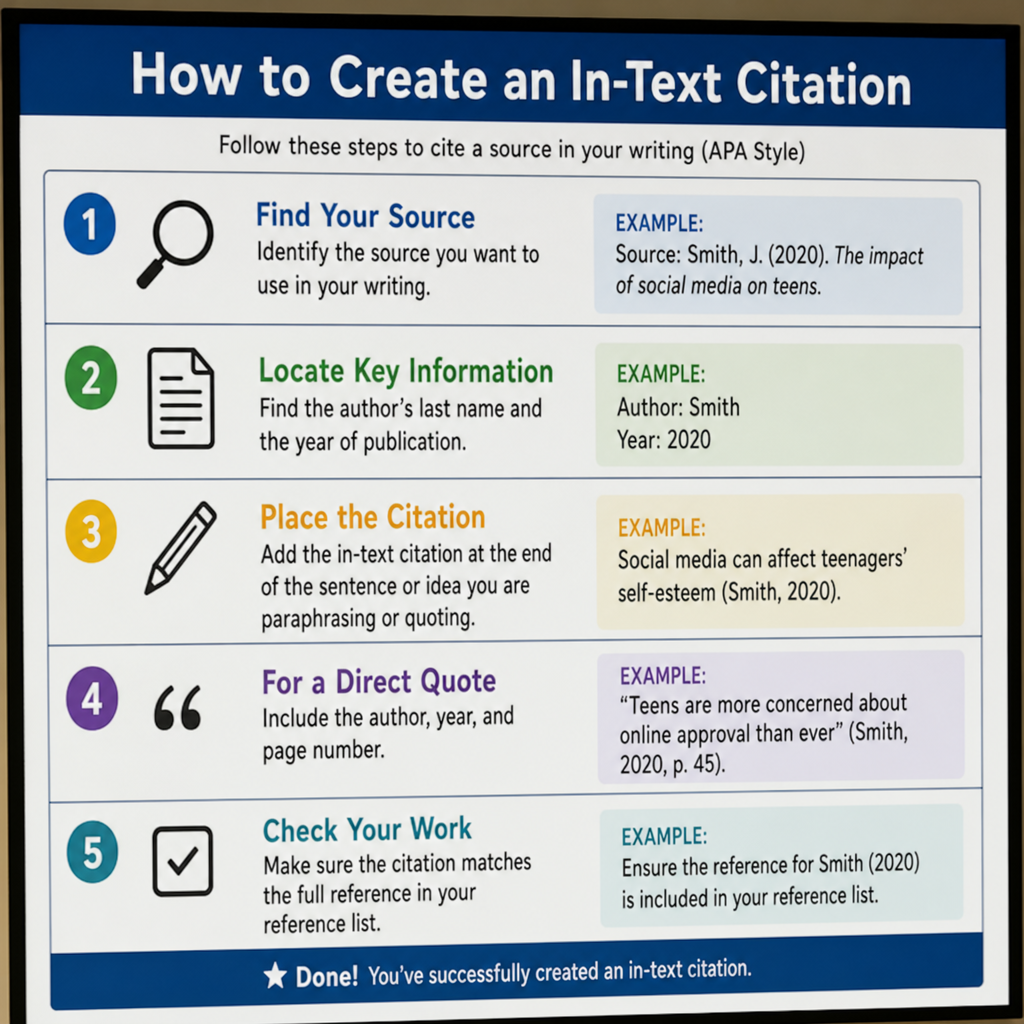
Step-by-Step Guide to In-Text Citations
If you are unsure how to properly credit a source within your paragraphs, follow this simple step-by-step guide to in-text citations using an automated tool:
- Generate the Full Reference: First, create the full bibliography entry using your free APA citation generator.
- Locate the In-Text Option: Most tools have a specific button labeled "copy in-text citation" next to the full reference.
- Choose Your Format: Decide whether you need a parenthetical citation (Author, Year) at the end of the sentence, or a narrative citation where the author's name is incorporated into the text (e.g., "According to Smith (2023)...").
- Add Page Numbers for Quotes: If you are quoting text directly, ensure you manually add the page number to the generated citation (e.g., Smith, 2023, p. 15).
- Paste into Your Document: Insert the citation seamlessly into your paragraph.
The Art of Blending Citations
While tools generate the correct format, integrating parenthetical citations naturally is an art form. Avoid simply dropping citations at the very end of long paragraphs. Instead, place the citation immediately following the specific fact, paraphrase, or quote it supports. Vary your sentence structures by mixing narrative citations with parenthetical ones to keep your writing flowing smoothly and professionally.
Advanced Features to Look for in a Citations Generator
As citation technology has advanced, so have the features available to users. While a basic web-based form is great for a quick essay, larger projects might require more robust solutions.
When evaluating software for organizing research sources, keep an eye out for these advanced capabilities:
- Browser Extensions: Look for browser extensions for instant citations. These handy plugins allow you to click a button in your browser toolbar to automatically generate a citation for the exact webpage or PDF you are currently reading, without opening a new tab.
- Cloud Syncing and Storage: The best open source reference managers (like Zotero or Mendeley) allow you to save your citations to the cloud. This means you can build your library on your laptop and access it later from a library computer.
- Word Processor Integration: Many advanced reference generators offer plugins for Microsoft Word or Google Docs, allowing you to insert citations and automatically update your bibliography without ever leaving your document.
How to Build Your Reference List Flawlessly
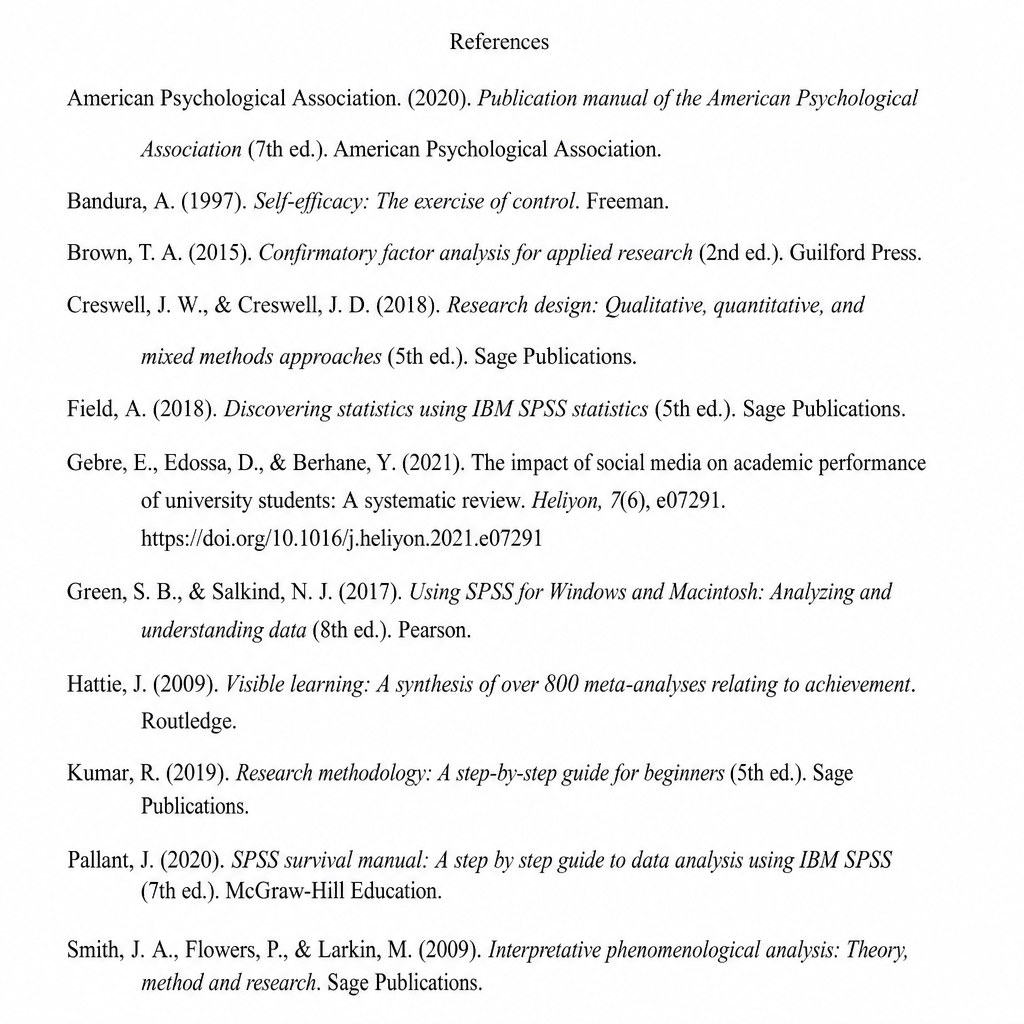
The culmination of your research process is creating an APA reference list. Even with a free cite generator, you must arrange the final output correctly.
Here are a few quick rules to remember when finalizing your bibliography:
- Alphabetical Order: Always order your references alphabetically by the first author's last name. Most generators will sort the list for you automatically.
- Hanging Indent: APA requires a hanging indent for the reference list. This means the first line of each citation is flush left, while all subsequent lines are indented by 0.5 inches.
- Double Spacing: The entire reference page must be double-spaced, with no extra spaces between entries.
- The "References" Title: Center the word "References" (bolded) at the top of a new page at the end of your document.
By pasting the output from your free APA citation generator into a properly formatted Word document, you guarantee a flawless, professional finish that will impress any professor or peer reviewer.
Final Thoughts
The days of agonizing over commas, italics, and publication locations are over. By embracing digital tools, you are not taking a shortcut; you are utilizing modern academic resources to work smarter, not harder.
Whether you are trying to navigate the latest American Psychological Association manual guidelines, figure out how to cite a website in APA, or simply want to automatically format bibliography for research paper deadlines, a free APA citation generator is your ultimate academic companion. It ensures accuracy, saves an immense amount of time, and protects you from accidental plagiarism.
Next time you sit down to write a research paper, let the software handle the formatting. Give yourself the freedom to focus entirely on your ideas, your research, and your writing. Armed with these tools and strategies, you are well on your way to achieving academic excellence with far less stress.
Frequently Asked Questions
Question: What makes a free APA citation generator better than manual formatting?
Short answer: It saves significant time and reduces errors. Instead of memorizing intricate APA rules or flipping through manuals, a generator pulls the correct metadata (author, date, title, source) and formats it to the latest APA 7th edition standards in seconds. This boosts accuracy (e.g., handling changes like removing publisher locations for books) and helps safeguard academic integrity by ensuring borrowed ideas are properly credited.
Question: Can I use the same tool for MLA or other citation styles?
Short answer: Yes. Many modern platforms aren’t limited to APA—they also function as MLA generators. You can quickly toggle styles (e.g., from APA to MLA) without learning a new tool, which is especially helpful when switching between courses that require different formats.
Question: How do I cite websites or journal articles when details are missing?
Short answer: Enter the URL into the generator; it will scan the page for author, date, title, and site name. If something is missing, the tool prompts you to fill in the gaps so the citation still complies with official guidelines. For journal articles, paste the DOI to fetch clean, reliable metadata directly from academic databases, minimizing manual entry and errors.
Question: What’s the easiest way to create accurate in-text citations with a generator?
Short answer:
- First generate the full reference, then use the tool’s “copy in-text citation” option.
- Choose parenthetical (Author, Year) or narrative style (e.g., “According to Smith (2023)…”).
- Add page numbers for direct quotes (e.g., Smith, 2023, p. 15).
- Blend citations where they support specific facts—not just at paragraph ends—and vary narrative and parenthetical formats to keep prose natural.
Question: After generating citations, what final steps ensure a flawless APA reference list?
Short answer:
- Alphabetize by the first author’s last name (most tools can auto-sort).
- Apply a 0.5-inch hanging indent for each entry.
- Double-space the entire page with no extra spacing between entries.
- Center and bold the title “References” at the top of a new page.
Pasting the generator’s output into a correctly formatted document with these finishing touches delivers a clean, professional bibliography.