
Every growing business eventually reaches a tipping point where a simple handshake or a quick email is no longer sufficient for buying goods and services. As your operational needs expand, so does the complexity of your spending. This is where mastering the fundamentals of corporate purchasing becomes not just a nice-to-have, but an absolute necessity.
At the heart of a well-oiled financial operation are purchase orders. If you have ever wondered how large organizations keep track of millions of dollars in spending without spiraling into chaos, the secret lies in these straightforward yet powerful documents.
In this comprehensive guide, we will break down the essential purchase order meaning, explore how these documents function in the real world, and show you why upgrading your current workflow can save your company time, money, and headaches.
What is a Purchase Order?
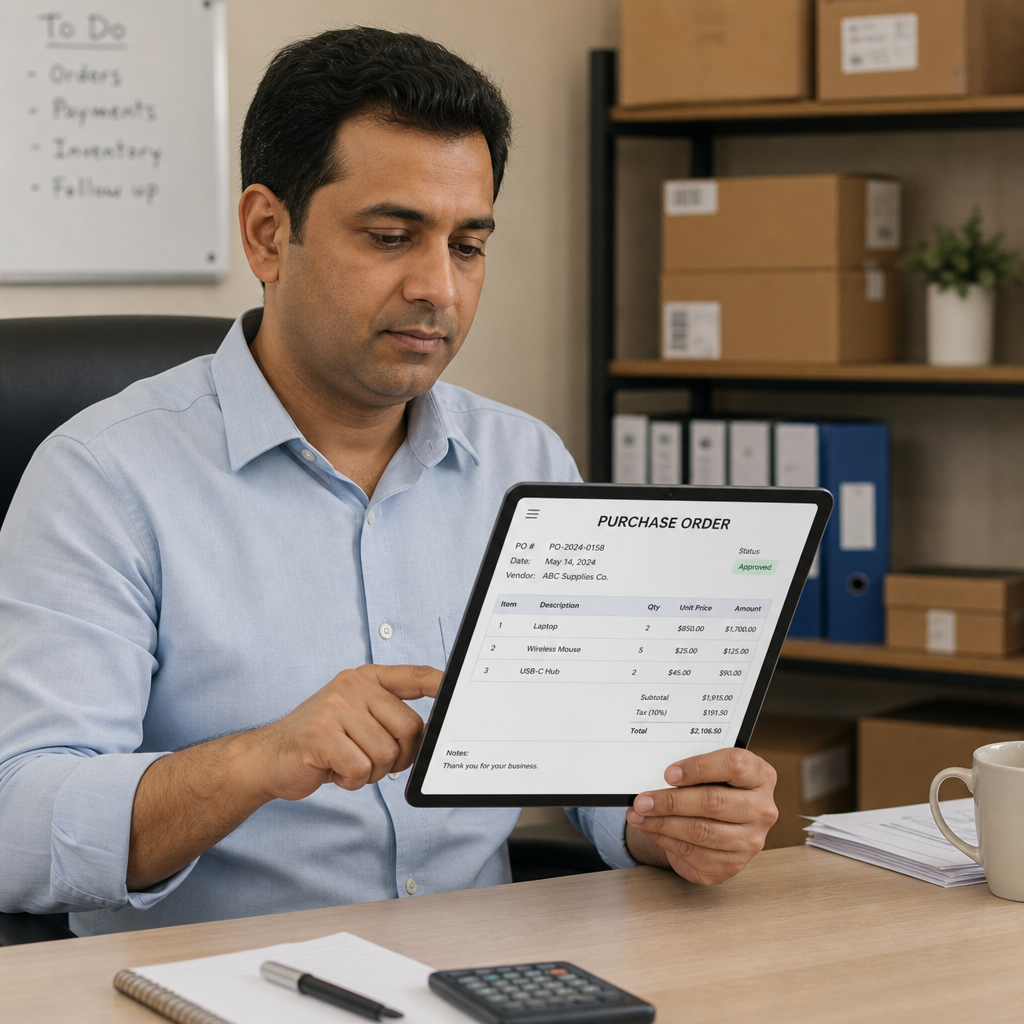
To grasp the true purchase order meaning, it helps to view it as the official starting point of a commercial transaction. A purchase order (often abbreviated as PO) is a formal document issued by a buyer to a seller, detailing the types, quantities, and agreed-upon prices for products or services.
Once the seller accepts this document, a binding agreement is formed. Understanding the legal validity of procurement documents is crucial here. Unlike a casual email request, an accepted PO acts as a legally binding contract that protects both the buyer and the seller if a dispute arises regarding pricing, delivery dates, or item specifications. In many organizations, a modern purchase order system or purchase order management software helps ensure acceptance steps and terms are followed consistently.
Real-World Examples of Purchase Order Types
Not all purchases are created equal, which is why different types of POs exist. By examining various examples of purchase order formats, you can choose the right one for your specific needs:
- Standard Purchase Orders: Used for a one-time purchase where the item, quantity, price, and delivery schedule are entirely known.
- Planned Purchase Orders: Anticipates future needs. The item, price, and quantity are known, but the exact delivery dates are left tentative.
- Blanket Purchase Orders: Used for recurring purchases over a specific timeframe (often a year). Pricing is negotiated upfront, but quantities and delivery dates are determined through subsequent "releases" against the blanket order.
- Contract Purchase Orders: The most formal type, where only the vendor and terms are established. Specific products, quantities, and prices are defined in future standard POs that reference this contract.
Where Purchase Orders Fit in the Procurement Cycle
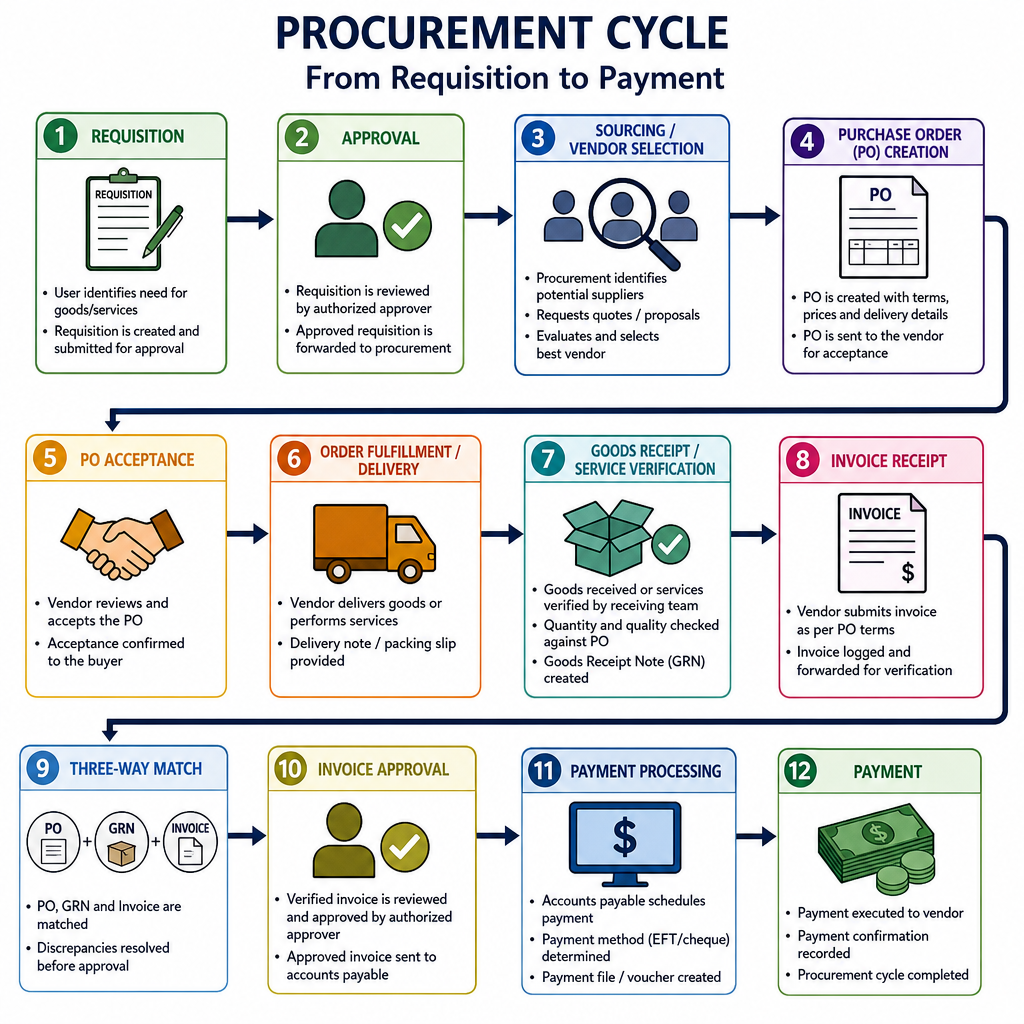
To truly understand the value of a purchase order , you must look at the broader picture. Every purchase your company makes goes through distinct procurement cycle stages.
The Standard Supply Chain Fulfillment Workflow
- Need Identification: An employee or department realizes they need a product or service.
- Purchase Requisition: A formal internal request is submitted to management or the purchasing department.
- Vendor Selection: The procurement team finds the right supplier and negotiates terms.
- PO Creation and Issuance: A formal PO is generated and sent to the vendor.
- Goods Receipt: The supplier delivers the goods, and the buyer logs a receiving report.
- Invoice Approval and Payment: The vendor sends a bill, the buyer verifies it, and payment is issued.
Clearing the Confusion: Requisition vs Invoice Comparison
If you are new to corporate finance, the sheer number of documents can be overwhelming. A common area of confusion is the requisition vs invoice comparison.
Simply put, a requisition is strictly an internal document. It is the method an employee uses to ask their manager for permission to buy something. To keep things organized, standardizing internal requisition forms is highly recommended. It ensures that whoever approves the request has all the necessary context, budget codes, and vendor details upfront.
An invoice, on the other hand, is an external document generated by the vendor after the goods or services have been delivered. It is the official request for payment. The PO sits right in the middle: it is the external document generated by the buyer to initiate the purchase.
The Financial and Operational Benefits
Relying on a structured purchase order system brings a multitude of benefits, particularly when it comes to financial control and inventory oversight.
Putting an End to Rogue Spending
One of the biggest challenges for growing businesses is figuring out how to prevent maverick spending. Maverick (or rogue) spending occurs when employees purchase goods outside of the company's negotiated contracts or without formal approval. This leads to blown budgets, compliance risks, and missed opportunities for bulk discounts. By enforcing a strict policy where "no PO means no purchase," you instantly bring all spending back under the control of the procurement team.
Enhanced Budget Visibility
Before the adoption of modern systems, finance teams often only knew about an expense when the invoice arrived. By then, the money was already spent. Proper usage of POs allows for accurate tracking committed vs actual expenditure. As soon as a PO is issued, those funds are earmarked in the budget as "committed," giving finance leaders a real-time, accurate picture of available cash flow.
Streamlining the Payables Process
When it comes time to pay the bills, a robust PO workflow is a lifesaver for the accounting department. You will often hear financial professionals ask, "what is a three way match?"
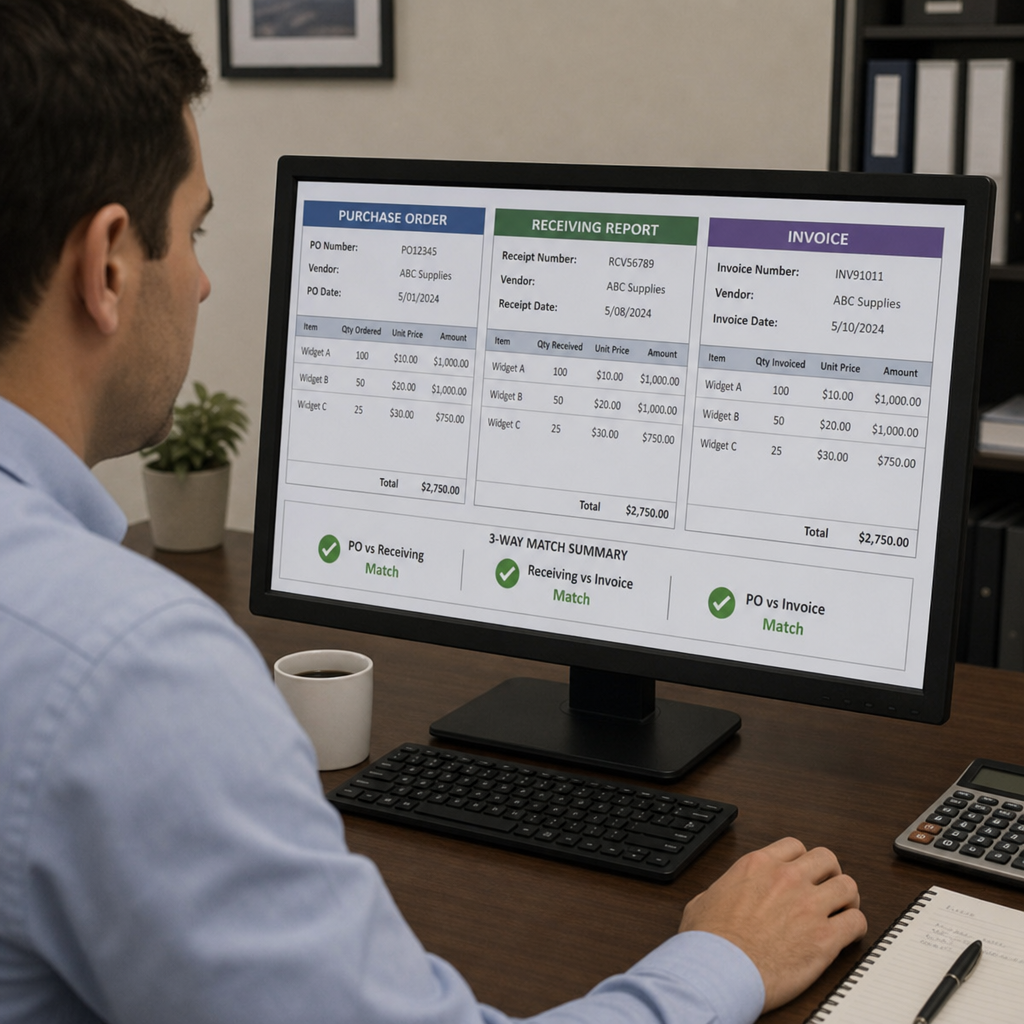
A three-way match is an essential internal control mechanism that verifies three distinct documents before a vendor is paid:
- The Purchase Order (What did we ask for?)
- The Receiving Report (What did we actually receive?)
- The Invoice (What are we being billed for?)
If the quantities and prices on all three documents match, the invoice is automatically approved for payment. If there is a discrepancy (e.g., you ordered 50 laptops, received 48, but were billed for 50), the system flags it. This heavily streamlines the accounts payable reconciliation process, ensuring you never overpay for goods you did not receive.
The Shift from Manual to Automated Systems
In the past, managing POs meant dealing with triplicate carbon-copy paper forms, filing cabinets, and lost documents. Today, businesses rely on digital purchase order systems to handle the heavy lifting. These purchase order systems centralize requests, approvals, receipts, and invoices, reinforcing consistent controls across departments.
The benefits of automated procurement systems cannot be overstated. By digitizing the workflow, companies can route approvals instantly based on department or dollar thresholds. For instance, a $50 office supply request might only need a direct manager's click, while a $50,000 software purchase is automatically routed to the CFO.
A major advantage of automation is reducing manual data entry errors. When a requisition is approved digitally, the software can automatically convert it into a PO, populate the vendor's details, and send it electronically. No re-typing is necessary, meaning no accidentally typing $10,000 instead of $1,000.
Choosing the Right Technology
As your operation scales, relying on basic spreadsheets will hold you back. You need dedicated purchase order management software —a modern purchase order system . The best e-procurement software solutions on the market do much more than just generate PDFs; they act as a central hub for all your purchasing activity. Look for purchase order management software that supports mobile approvals, audit trails, and configurable workflows.
Key Integrations and Technical Standards
When evaluating software, look closely at how well it plays with your existing technology stack. Seamless inventory management software integration is critical for businesses that deal with physical goods. When a PO for raw materials is marked as received, the integrated inventory system should automatically update stock levels, triggering alerts if items are running low, thus keeping your supply chain fulfillment workflow running without interruption.
Furthermore, if you deal with enterprise-level suppliers, check if the software supports electronic data interchange standards (EDI). EDI allows your procurement software to "talk" directly to your vendor's software. When you generate a PO, it is transmitted as raw data straight into their ordering system, bypassing email entirely. This drastically speeds up fulfillment and minimizes human error on both ends.
Vendor Management Best Practices
Ultimately, purchasing isn't just about paperwork; it's about relationships. Implementing a strict PO process is actually a core component of vendor management best practices.
Vendors appreciate buyers who use POs because it gives them clear, unambiguous instructions. There is no confusion about what needs to be delivered, when, or at what price. This clarity speeds up their fulfillment process and ensures they get paid on time, fostering a mutually beneficial partnership.
To maintain excellent vendor relationships, always ensure your POs include:
- A unique PO number for tracking.
- Accurate company billing and shipping addresses.
- Detailed line items with exact product numbers, descriptions, quantities, and unit prices.
- Clear payment terms (e.g., Net 30, Net 60).
- Specific delivery instructions or deadlines.
Conclusion: The Foundation of Smart Spending
Understanding the basics of purchase orders is the first step toward building a mature, financially sound business. Moving away from ad-hoc emails and verbal agreements toward a structured purchasing protocol protects your company legally, provides crystal-clear budget visibility, and keeps your vendors happy.
Whether you are implementing standardizing internal forms for the first time or upgrading to advanced, automated software, the goal remains the same: complete control over where every dollar goes. By embracing these best practices—and leveraging the right purchase order systems—you empower your team to buy what they need efficiently, all while safeguarding your company's bottom line.
Q&A
Question: What is a purchase order (PO) and why is it important?
Short answer: A purchase order is a formal document a buyer sends to a seller that specifies items/services, quantities, prices, and delivery details. Once the seller accepts it, the PO becomes a legally binding contract that protects both parties if disputes arise over price, timing, or specifications. Modern purchase order systems help enforce acceptance steps and terms consistently, making purchasing more controlled and auditable.
Question: What are the main types of purchase orders and when should I use each?
Short answer: Use different PO types based on predictability and timing:
- Standard PO: For a one-time purchase when item, quantity, price, and delivery date are fully known.
- Planned PO: When you know item, price, and quantity, but delivery dates are tentative.
- Blanket PO: For recurring purchases over a set period; price is set upfront, and releases specify quantities/dates later.
- Contract PO: Establishes vendor and terms; specific products, quantities, and prices are defined in future standard POs that reference the contract.
Question: How do a requisition, a purchase order, and an invoice differ?
Short answer: A requisition is an internal request an employee submits for approval to buy something. A purchase order is the buyer’s external document that officially initiates the purchase with the vendor after approvals. An invoice is the vendor’s external request for payment after goods or services are delivered. In the procurement cycle, a requisition precedes vendor selection and PO creation; the invoice arrives after goods receipt and is matched against the PO.
Question: What is a three-way match and how does it protect my company?
Short answer: A three-way match verifies that three documents agree before payment: the purchase order (what was ordered), the receiving report (what was received), and the invoice (what’s being billed). If quantities and prices match, the invoice is approved; discrepancies are flagged (e.g., ordered 50, received 48, billed for 50). This speeds up accounts payable reconciliation and prevents overpayments for undelivered items.
Question: Why move from manual to automated PO systems, and what integrations matter?
Short answer: Automated systems centralize requests, approvals, receipts, and invoices; route approvals by department and dollar thresholds; and reduce manual data entry errors by converting approved requisitions directly into POs. They also help enforce “no PO, no purchase” to curb maverick spending and improve budget visibility by tracking committed vs. actual spend. Look for integrations with inventory management (auto-updates stock on receipt) and support for EDI so POs flow directly into suppliers’ systems. Features like mobile approvals, audit trails, and configurable workflows further strengthen control and efficiency.